
Manufacturing Operations
How we helped an organization recoup millions in losses with operational discipline and fundamental leadership
Client Context
A confidential U.S.-based manufacturing organization in the food industry producing a commodity product for national distribution.
Multiple manufacturing sites
Seasonal, labor-intensive production cycles
Union and non-union hourly workforce
Newly appointed CEO following senior leadership turnover
The organization had strong market demand and adequate assets—but persistent underperformance that leadership could not fully explain.
Organizational Reality at Entry
The assessment revealed a deeply destabilized operating environment.
Under the previous leadership, the organization had developed a coercive, fear-based culture:
managers were rewarded for loyalty rather than performance
dissent or visibility—positive or negative—was punished
inaction became safer than ownership
This resulted in:
poor transparency
avoidance of accountability
inconsistent leadership capability across sites
Most senior manufacturing leaders were replaced. However, cultural residue and uneven management capability remained.


Site Profiles
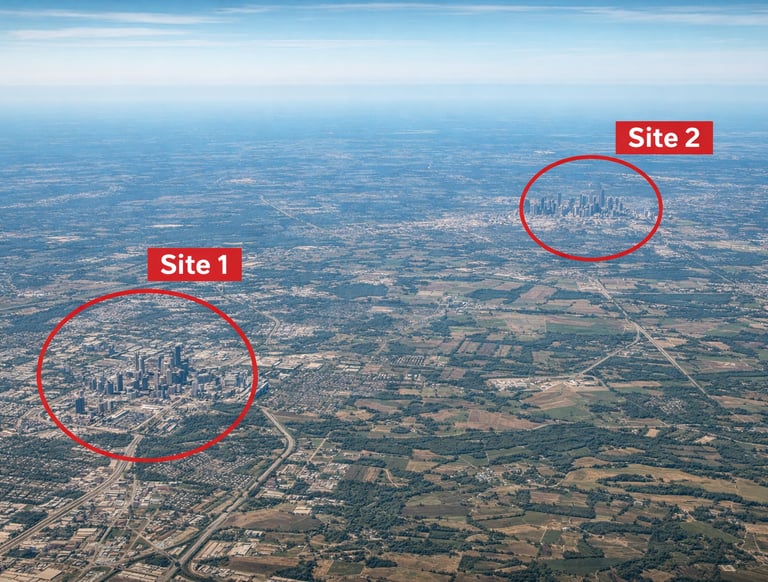
Site 1 — Primary Manufacturing Facility
Largest and most critical site in the network
New site manager with strong technical knowledge but limited leadership effectiveness
Shop floor performance appeared “acceptable,” masking significant inefficiencies
Key issues included:
weak hour-by-hour operational discipline
supervisors overwhelmed by administrative load
limited coaching of seasonal, inexperienced workers
excessive equipment downtime
chronic product overfill to avoid regulatory underfill risk
The overfill issue alone resulted in substantial product loss with no visibility or corrective action.
Site 2 — Smaller Facility, Legacy Leadership
Managed by a site leader from the prior regime
Culture of avoidance and superficial compliance
Chronic absenteeism tolerated beyond policy limits
Maintenance capability fundamentally inadequate
Staffing shortfalls and poor maintenance practices directly limited daily production and revenue capture
The Approach
The engagement focused on establishing operating discipline and leadership fundamentals, not wholesale restructuring.
Key interventions included:
Rapid, on-site operational assessment
Installation of a simple manufacturing operating system
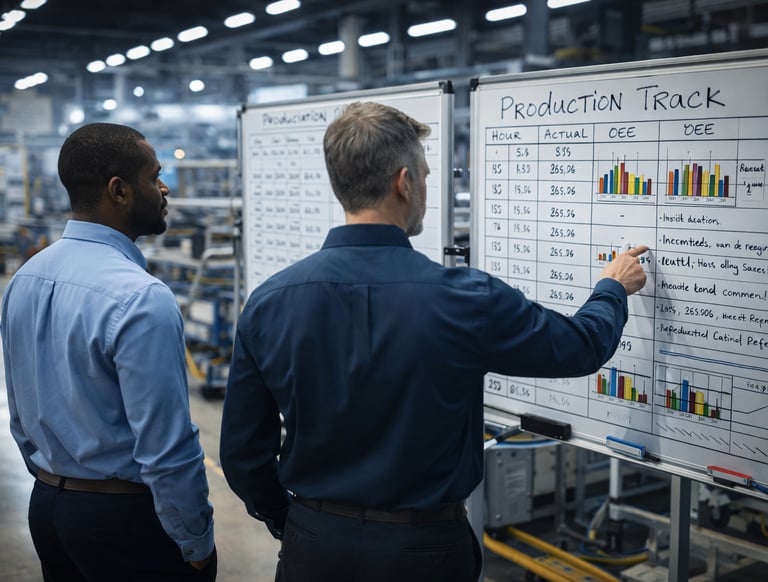
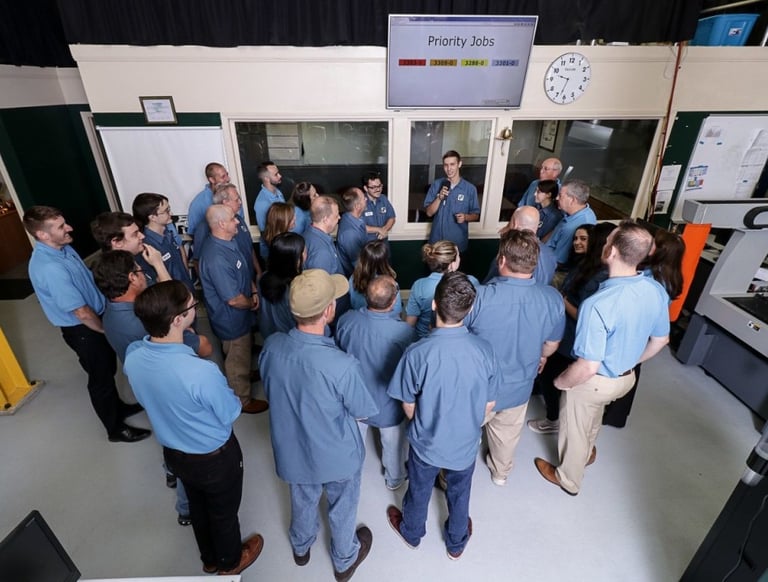
Hourly production tracking via visual performance boards
Supervisor coaching conducted live on the shop floor
Immediate issue escalation and resolution discipline
Daily review and action planning of results
At Site 1, work focused almost exclusively on supervisors and operators after the site manager disengaged, believing the work was unnecessary.
At Site 2, leadership issues were escalated directly to the Director of Operations when avoidance behaviors persisted.
Leadership Decisions
At Site 2, the incumbent site manager was placed on a formal improvement plan after continued resistance and noncompliance. When expectations were not met, leadership made the decision to replace her.
The newly appointed site manager immediately embraced:
the operating system already proven at Site 1
supervisor training and accountability
disciplined staffing and attendance management
This leadership change proved decisive.


Outcomes
Site 1 Results
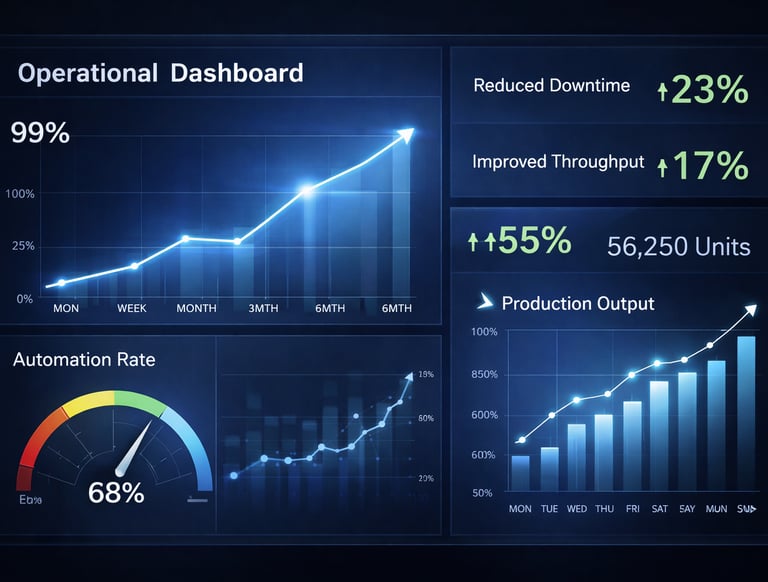
12% operational performance improvement
Approximately $7M in cost reduction (annualized)
Improved equipment uptime and line efficiency
Significant reduction in product overfill
Safer, more stable operating environment
Results were achieved within a six-month engagement, despite limited involvement from site leadership.
Site 2 Results
18% throughput improvement
$1.2M direct savings in halting overfill
improved attendance and reduced turnover
an engaged and happy workforce, eager to improve the business
These improvements resulted in approximately $4M in annualized cost savings.
Enterprise-Level Impact
Across both sites, the engagement delivered:
approximately 5:1 ROI against a 1:1 expectation
stabilized leadership capability
transferable operating discipline
Equally important, performance continued to improve after the engagement ended, indicating true capability transfer rather than consultant dependence.


The Role of Leadership Trust
Throughout the engagement, the consultant worked closely with C-suite leaders, spending several hours per week in direct discussion.
Over time, this relationship evolved into an executive coaching role with the CEO—providing a trusted, independent perspective during a period of organizational reset.


Why the Results Held
Performance gains were sustained because:
supervisors were taught how to manage daily execution
leaders learned to see and respond to problems in real time
accountability was normalized without fear
systems were simple, visible, and repeatable
This was not a turnaround driven by pressure. Its was driven by clarity and discipline.
Executive Takeaway
Operational performance improves when leadership behaviors change.
In seasonal, labor-intensive manufacturing environments, results are determined less by assets or technology and more by:
supervisor capability
operating discipline
and leadership courage to address dysfunction directly
When those fundamentals are in place, performance follows—and sustains.
About Us
Global Leading LLC is a consulting supporting manufacturing leaders through operational improvement, leadership development, and execution discipline.
Dallas | Milan
Global Leading LLC © 2026 All rights reserved.
Contact
chris.smith@global-leading-llc.com
U.S. +1-210-601-1689
EU +39-375-7412810